


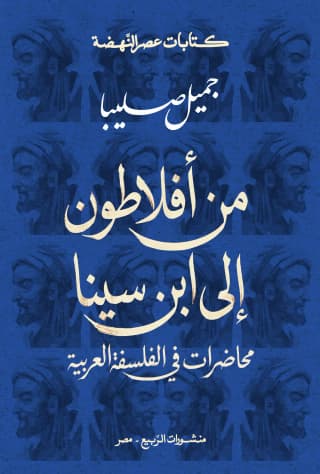
From Plato to Ibn Sina
By Al-Rabie PublicationsPublished by Al-Rabie Publications
Are philosophers prophets? And are prophets philosophers? And what is the difference between the two views at the level of philosophical interpretation?
DeliveryDepends on the shipping method PaymentSeveral ways to pay Safe checkoutYour details are protected
- Coming soonReaders rating
- Coming soonPublished
- Coming soonPages
- 108Author's books here
About the book
Are philosophers prophets? And are prophets philosophers? And what is the difference between the two views at the level of philosophical interpretation?
Jamil Saliba
A philosopher and thinker who studied philosophy at the American University of Beirut and then at the Sorbonne in Paris, where he earned his doctorate. He is considered one of the leading founders of modern academic philosophical study in the Arab world, and devoted his effort to the study of Greek philosophy and Arab-Islamic philosophy and their relation to religious thought.
He was distinguished by the precision of his terminology and the rigour of his method, and contributed to establishing a modern Arabic philosophical language.
In his book , Lectures on Arabic Philosophy
In this book he gathers six lectures on the history of Arabic philosophy, whose main aim is to show Plato's influence on the doctrine of (Ibn Sina) and the Arab philosophers before him.
He acknowledges that most historians of philosophy say with (Renan) that Arabic philosophy was taken from Aristotle, and that the Arab philosophers were captivated by the sage of Stagira and followed his trail compelled rather than by choice, because the philosophical sciences reached them through the School of Alexandria and they accepted them as they arrived without criticising them. Even Munk said: "There is no doubt that the Arabs chose Aristotle and preferred him to others, because his logic was a useful weapon in the disputed matters between the different theological schools."
From here begins the disagreement between the Arab philosophical schools over philosophy and religion, on the grounds that their aims are the same and they differ only in apparent details.
Book details
- Authors
- Al-Rabie Publications
- Pages
- Coming soon
- Format
- Paperback
- Language
- Arabic
- Publisher
- Al-Rabie Publications
- Category
- Renaissance Writings, Free Thought
- ISBN
- Coming soon
- Reads
- Coming soon
- Share

Al-Rabie Publications
Egyptian publisher
Best Egyptian Publisher award, 2025.
Reader reviews
Be the first to review this book
Your opinion helps other readers choose.