



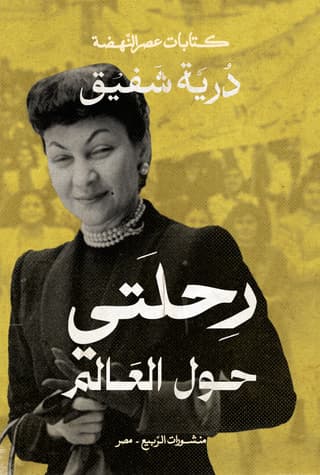
The Egyptian Woman from the Pharaohs to Today
By Doria ShafikPublished by Al-Rabie Publications
Doria Shafik succeeded in founding the first women's political party in Egyptian history (the Bint al-Nil Party), from which the (Bint al-Nil Battalions) emerged, the first women's military battalion, made up of thirty thousand Egyptian women to fight alongside men against colonialism in 1956 during the Tripartite Aggression on Egypt; the work of this unique military unit continued through the 1967 setback and the October 1973 war.
DeliveryDepends on the shipping method PaymentSeveral ways to pay Safe checkoutYour details are protected
- Coming soonReaders rating
- Coming soonPublished
- Coming soonPages
- 3Author's books here
About the book
Doria Shafik succeeded in founding the first women's political party in Egyptian history (the Bint al-Nil Party), from which the (Bint al-Nil Battalions) emerged, the first women's military battalion, made up of thirty thousand Egyptian women to fight alongside men against colonialism in 1956 during the Tripartite Aggression on Egypt; the work of this unique military unit continued through the 1967 setback and the October 1973 war.
Despite this, she was placed under house arrest, her magazine (Bint al-Nil) was shut down, and an order was issued to erase her name from newspapers and publications, after many criticisms she directed at President Gamal Abdel Nasser's regime since 1957, when she called him the "dictator" and demanded that he leave Egypt's rule. The West at the time regarded her as the struggling, patriotic political woman who stands like a thousand men against the dictator who does not support freedoms, while some pens accused her of treason and of being an agent of the West; even the women taking part in her Bint al-Nil women's society abandoned her and expelled her from it.
All this put her in isolation for 18 years, during which she translated the Holy Quran into English and French, wrote volumes of poetry and books published in French, and published her memoirs.
Doria Shafik's story ended with her fall from the sixth floor in 1975, leaving behind a great legacy of struggle and women's work and many victories in women's rights and her entry into public work and political and cultural life, and more bewilderment and questions about her and the truth of her mysterious end between interpretations of suicide and suspicion of being eliminated.
Book details
- Authors
- Doria Shafik
- Pages
- Coming soon
- Format
- Paperback
- Language
- Arabic
- Publisher
- Al-Rabie Publications
- Category
- Renaissance Writings, History, Feminism
- ISBN
- Coming soon
- Reads
- Coming soon
- Share

Doria Shafik
A pioneer of the women’s movement
A pioneer of the Egyptian women’s movement, born on 14 December 1908 in Tanta. She published the magazine «Bint al-Nil» and founded the Bint al-Nil Union, which after the 1952 revolution became Egypt’s first women’s political party. She died on 20 September 1975 after long years of seclusion; the circumstances of her death are still questioned.

Reader reviews
Be the first to review this book
Your opinion helps other readers choose.