



The Voice of Abu al-Ala
By Taha HusseinPublished by Al-Rabie Publications
Abu al-Ala is unique in all Arabic literature; he reached from the realities of things what no Arab writer before or after him reached. If ancient Greek literature boasts of Epicurus, if ancient Latin literature boasts of Lucretius, and if modern European civilisation boasts of its pessimistic writers and philosophers, then Arabic literature has the right to boast of Abu al-Ala; Abu al-Ala is no less than these distinguished figures in importance or lesser in stature, and perhaps he stands out from them with arts of literature and science they did not achieve; Abu al-Ala was a philosopher of deep philosophy, sound in his view of the matters of life and the living, and Abu al-Ala was a poet, of elevated, pure, captivating poetry, who reached in it, in many cases, a quiet splendour that the great poets of Arabic, old and new, did not reach.
DeliveryDepends on the shipping method PaymentSeveral ways to pay Safe checkoutYour details are protected
- Coming soonReaders rating
- Coming soonPublished
- Coming soonPages
- 8Author's books here
About the book
Abu al-Ala is unique in all Arabic literature; he reached from the realities of things what no Arab writer before or after him reached. If ancient Greek literature boasts of Epicurus, if ancient Latin literature boasts of Lucretius, and if modern European civilisation boasts of its pessimistic writers and philosophers, then Arabic literature has the right to boast of Abu al-Ala; Abu al-Ala is no less than these distinguished figures in importance or lesser in stature, and perhaps he stands out from them with arts of literature and science they did not achieve; Abu al-Ala was a philosopher of deep philosophy, sound in his view of the matters of life and the living, and Abu al-Ala was a poet, of elevated, pure, captivating poetry, who reached in it, in many cases, a quiet splendour that the great poets of Arabic, old and new, did not reach.
I introduced Abu al-Ala to the elite, and I would like to introduce him to the general public, with an accurate translation of him and a precise interpretation of his poetry, for if I had published the "Luzumiyat" among the general educated public, most of them would not have understood it, because Abu al-Ala did not compose the Luzumiyat for the general educated public; indeed, I do not know! perhaps he composed it for himself, and for those who rise to his level among people of vast knowledge and penetrating insight. So what prevents me from easing the Luzumiyat for those who cannot read its violent poetry, not without strangeness?
Perhaps after reading this passage from Taha Hussein's discourse on this literary masterpiece in our hands you will realise, dear reader, the bond that ties the Dean to Abu al-Ala; they are a voice and its echo, as many have described them, and we do not know which is the voice and which the echo..
Book details
- Authors
- Taha Hussein
- Pages
- Coming soon
- Format
- Paperback
- Language
- Arabic
- Publisher
- Al-Rabie Publications
- Category
- Renaissance Writings, Studies & Criticism
- ISBN
- Coming soon
- Reads
- Coming soon
- Share
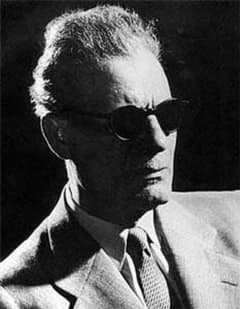
Taha Hussein
Dean of Arabic literature
An Egyptian writer and thinker known as the Dean of Arabic Literature, born on 14 November 1889 near Maghagha in Minya and blind from early childhood. He studied at Al-Azhar, the Egyptian University and the Sorbonne, took his doctorate on Abu al-Ala al-Maarri in 1914, ran Alexandria University and became minister of education in 1950. His works include «The Days», «On Pre-Islamic Poetry», «The Call of the Curlew» and «The Future of Culture in Egypt». He died on 28 October 1973.




Reader reviews
Be the first to review this book
Your opinion helps other readers choose.